DJ Kurlander - Project Resources
Microsoft Surface (PlayTable)
Overview
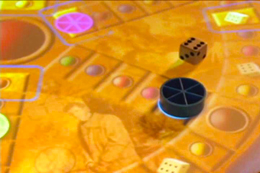
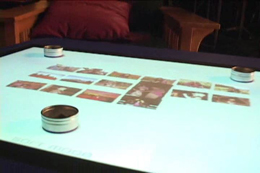
Microsoft Surface Table enables a radically different way of interacting with computer technology. It has a large table top display, enhanced by sophisticated sensing technology. Using computer vision, it detects object shapes, unique tags (or bar codes), as well as the touch of any number of fingers. In response, it animates the surface, or triggers real world objects that have been placed upon it.
We originally envisioned the Microsoft Surface Table as a center point for family entertainment, enhanced by computer technology. Three high level goals motivated this product:
First, we wanted to enable people to cooperatively play and work together. As part of this, we envisioned a new "hearth" experience for the home. Family members could all interact with the Surface Table at the same time, and remote friends or family could be visually represented on the device, for a unified, collaborative experience.
Second, we aimed to enable people to interact more naturally with computers. Tangible objects, like game pieces, dice, and cards could be used as "input" to the table. Surface Table understood finger touches and gestures. It distinguished between similar objects via tags. By aiming to make the interaction more natural than traditional computers, we created a device that required less learning and was more intuitive.
Third, we strived to create a technology that enables new and enhanced entertainment. The physical controls the virtual, but the virtual also controls the physical. This enhances traditional games and entertainments, as well as totally new entertainment experiences.
History
David (DJ) Kurlander was General Manager of Microsoft's New Consumer Products effort, and the Surface Table team. In 2002, he gathered a group of people from throughout the company to brainstorm on ideas for new consumer products. Two different groups suggested a computerized game table, and below is a sketch that came out of that meeting.

Initially, DJ put together a virtual team of people with different expertise to build the prototype. Stevie Bathiche, from Microsoft Hardware, built the first prototype, and Andy Wilson, from Microsoft Research, developed the initial vision / system software. Allen Han, from Microsoft Hardware, worked on design, and DJ, Joel Dehlin, and Christina Chen from the New Consumer Products group, developed scenarios and interaction techniques. Michael Kim, also of New Consumer Products, validated the product with potential customers and found substantial interest.
At the same time, the team worked with Lego Corporation on the product concept. New Consumer Products had been asked by Steve Ballmer to explore a potential joint product with Lego Corporation. Although that joint product never materialized, it was still helpful (and incredibly fun) for Microsoft to work with Lego while scoping out the product.
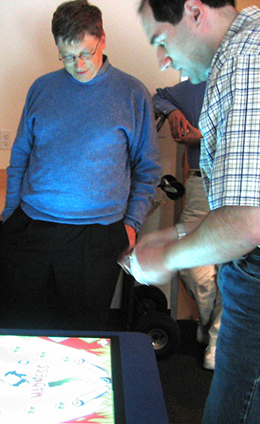
Initially the we called our product, "The Virtual Game Table", but soon after it became called "PlayTable". We presented the PlayTable product to Bill Gates and other execs in 2003. Bill became a great supporter of the product.
Scenarios and Applications
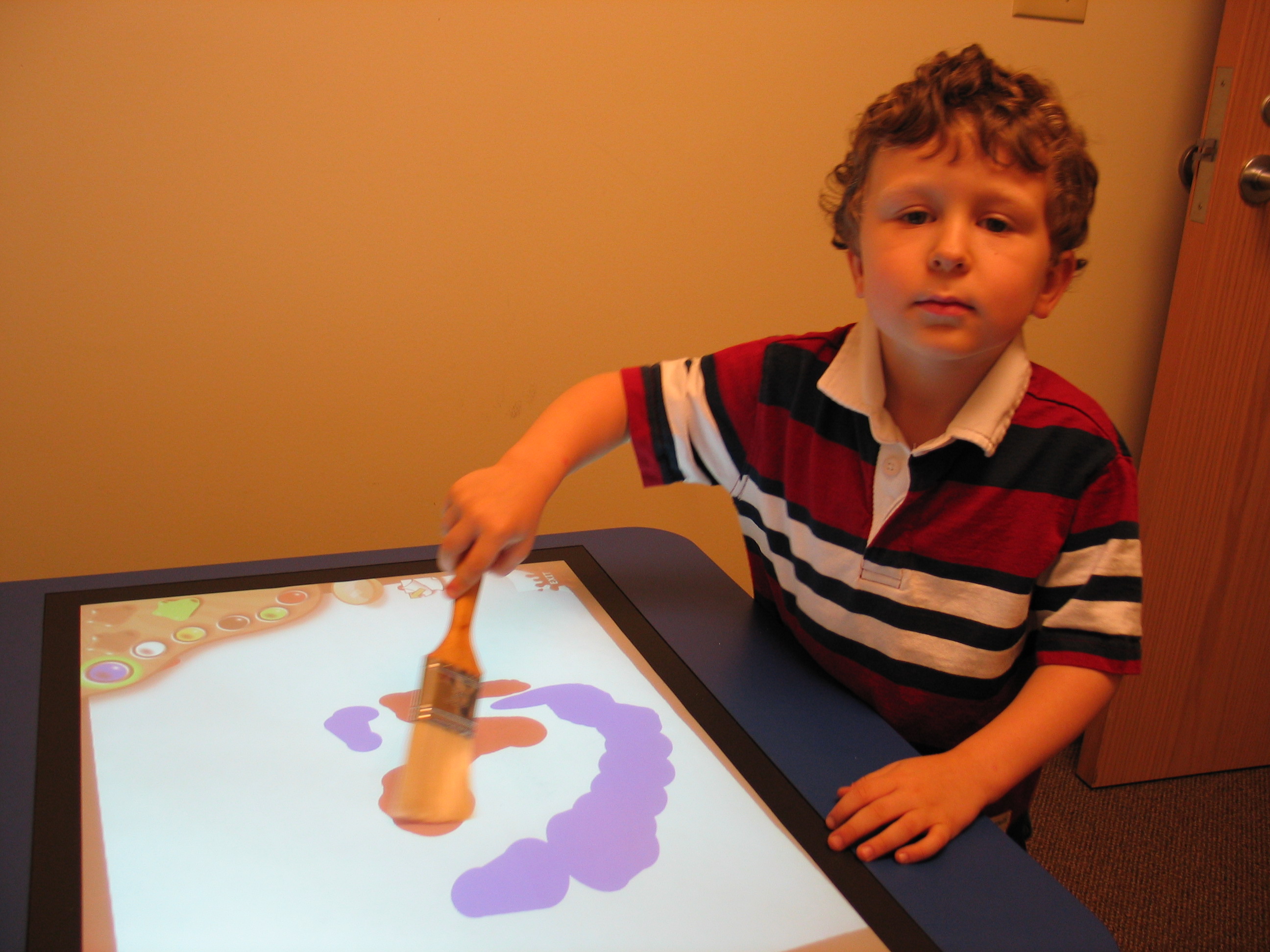
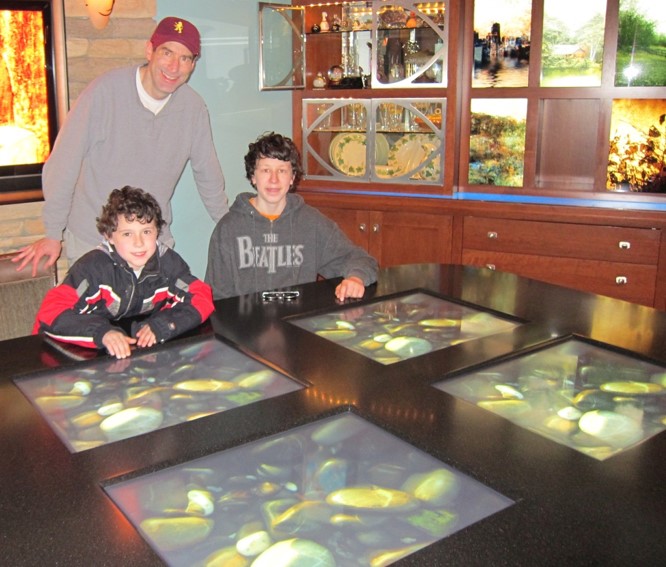
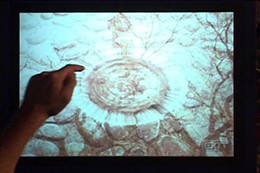
The best way to get a sense of the capabilities of the Microsoft Surface Table is to watch an introductory video. However, here I'll present a number of the applications that the team built while developing Surface, which will hopefully give you a idea of its value and potential.




Some other scenarios and applications include:
- Video Puzzle - Users are challenged to solve a puzzle, made out of transparent tiles. The Table sees an otherwise invisible infrared tag on each piece, so it can uniquely distinguish between them. Fragments of the video frame are projected through each tile, and people try to reorganize them to show the complete, unified video.
- TV Companion - The table acts as both a remote control, and secondary display providing additional information about the show being watched, as well as other shows that interest the user. The table could network in friends who were watching a show simultaneously, allowing them to share comments or video annotations.
Acknowledgments
A team of great visionary folks within Microsoft helped to make Surface Table a reality. DJ Kurlander led the ideation and early productization efforts, but he had the incredibly great fortune of working with a team of tremendous collaborators, including Stevie Bathiche, Andy Wilson, Joel Dehlin, Christina Chen, Nigel Keam, Doug Kramer, Kris Nye, Dan Robbins, Allen Han, Michael Kim, Jon Canfield, and many others